The Occupational Health and Safety Working Group formed within the Turkish Confederation of Employer Associations (TİSK) visited our Occupational Health and Safety Research and Development Institute (İSGÜM). Throughout the visit program of the Working Group, which consists of occupational safety specialists, occupational physicians, and OHS managers serving across different sectors and workplaces nationwide, the activities of our General Directorate and our Institute were introduced, current occupational health and safety practices were evaluated, and our laboratories and application areas were showcased.
In the program, which included participants representing numerous institutions and organizations—notably SASA, Eczacıbaşı, Banvit, Pınar Et, Yünsa, İEİS, Güriş, ÇEİS, MESS, KİPLAS, SEİS, TPAO, Ülker, Petkim, MKE, TÜHİS, Drogsan İlaç, World Medicine, and the Meat and Milk Board—our General Directorate and İSGÜM personnel were also present.
The Program Began with Opening Speeches
Speaking at the opening of the visit program, TİSK Secretary General Akansel KOÇ expressed his pleasure at being at İSGÜM and thanked the Institute for hosting the Working Group. Stating that occupational health and safety is an indispensable priority for TİSK, KOÇ expressed that they have strived to contribute in every way to efforts in this field for many years. Addressing the participants in the Working Group, he stated: “You are the experts in the field. I hope you have a fruitful and enjoyable day during our visit.”
Our General Director Erhan TAYLAN, in his speech, expressed his satisfaction in hosting the participants at our Institute and emphasized that İSGÜM holds a significant position in the field of occupational health and safety. Drawing attention to the importance of recognizing and disseminating the activities carried out at our Institute, TAYLAN noted that such gatherings bringing together representatives of the public and private sectors are extremely valuable.
Following the introductory session held after the opening remarks, the presentation program commenced.
Turkey’s OHS Outlook and Future Period Policies Were Evaluated
The first presentation was delivered by our Head of Authorization and Data Management Department, Tolga MURATDAĞI. In the presentation titled “Turkey OHS Outlook,” workplace and employee figures, distributions of workplaces and employees by sector and province, occupational accident and occupational disease statistics, and current data regarding individuals and institutions authorized by our General Directorate were shared.
Subsequently, a presentation titled “Current and Future Period OHS Practices and Policies” was delivered by our Head of Legislation Department, Hande Seray TUNCAY. The presentation addressed the activities of the National Occupational Health and Safety Council, the National Occupational Health and Safety Policy Document and Action Plan, implementations of the Occupational Health and Safety Law No. 6331, our activities aimed at enhancing the safety culture, projects planned for implementation, occupational health and safety training for workers, and regulatory arrangements concerning work equipment.
Field Experts Shared Their Experiences
Within the scope of the program, Petkim Occupational Physician Sema Şevken TURGUT delivered a speech on occupational hygiene. The presentation emphasized the importance of addressing workplace ambient measurements and risk assessments from an occupational hygiene perspective.
Afterward, BEKO Senior Occupational Safety and Human Rights Manager Bülent GÖK provided information to participants on machinery safety. Sharing points to be considered while preparing technical specifications in machinery procurement processes, GÖK touched upon the importance of examining past occupational accidents in safe machinery selection.
The final presentation of the program was delivered by our Institute President, Şehmus ÜNVERDİ. ÜNVERDİ introduced the activities carried out by İSGÜM from its establishment to the present, its organizational structure, regional laboratory directorates, campus, and departments. Furthermore, he provided comprehensive information to participants regarding our Occupational Hygiene Laboratories, our PPE Testing Laboratory and Testing Tower, our Mobile Occupational Health Vehicles, our training activities, our Asbestos Room, our control certificate activities, our Occupational Health and Safety Museum, and our Virtual Reality Area.
Laboratories and Application Areas Were Examined On-Site
Following the presentations, on-site inspections were conducted together with the working group.
First, the İSGÜM Virtual Reality Area was visited. Here, virtual reality applications used in occupational health and safety training were introduced to participants. Through a paint workshop scenario, a participant was given a virtual workplace experience regarding the selection of personal protective equipment.
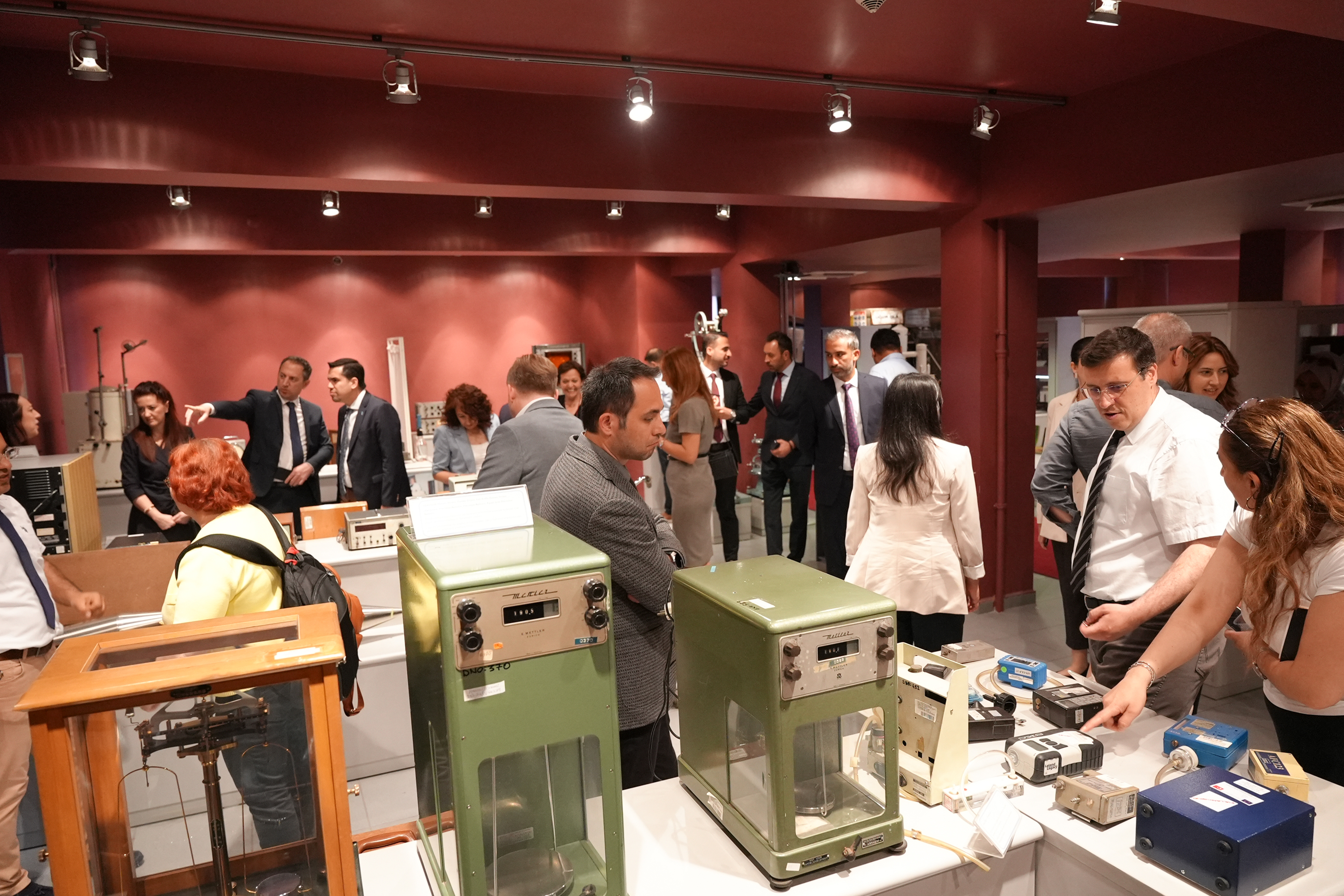
Next, our Occupational Health and Safety Museum was visited. In our Museum, established to transmit the occupational health and safety culture across generations, information was shared regarding instruments, equipment, and apparatus used in past periods.
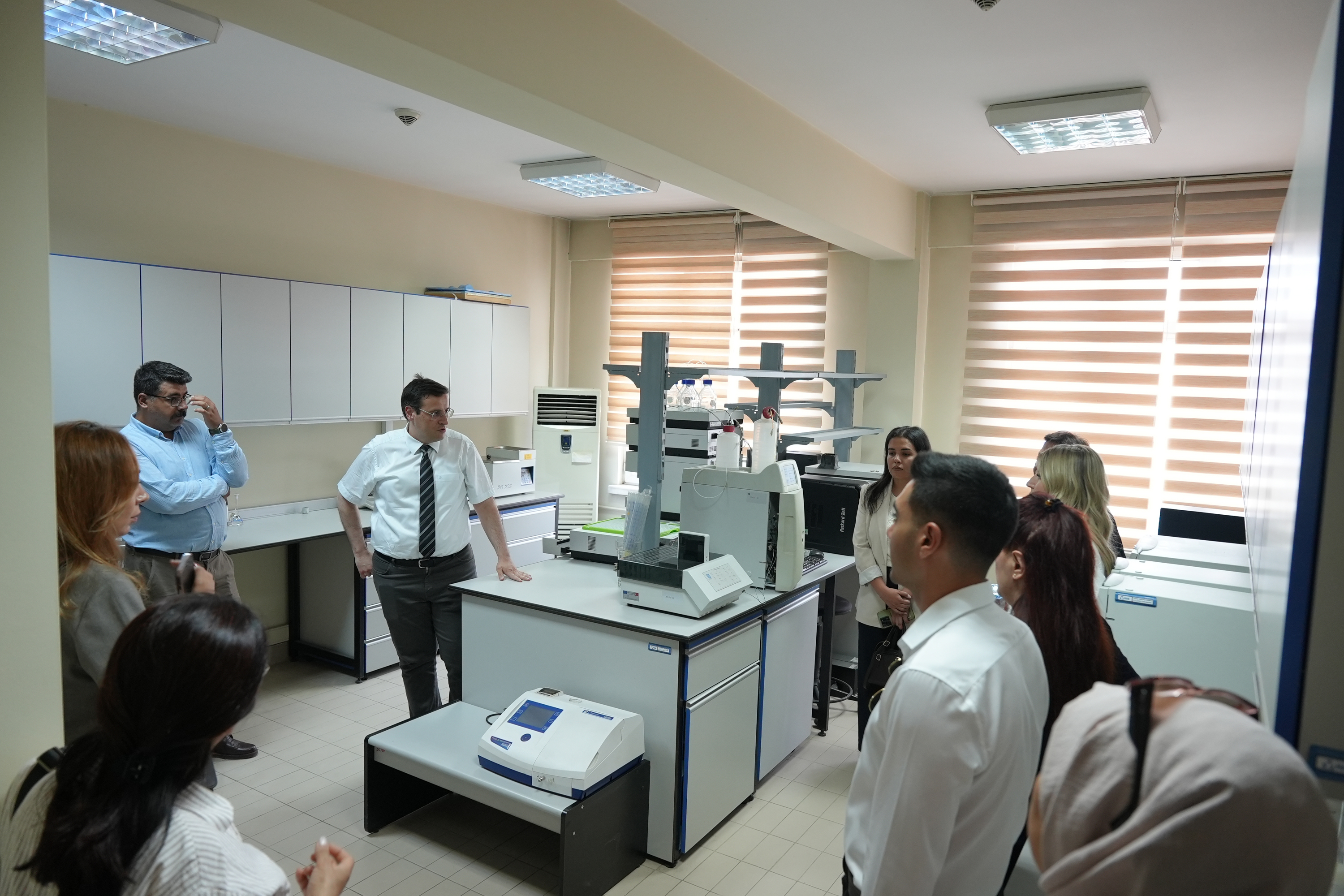
In the continuation of the program, our Occupational Hygiene Laboratories were toured. The work conducted in the laboratories, instruments utilized, and analysis processes carried out were explained to the participants on-site.
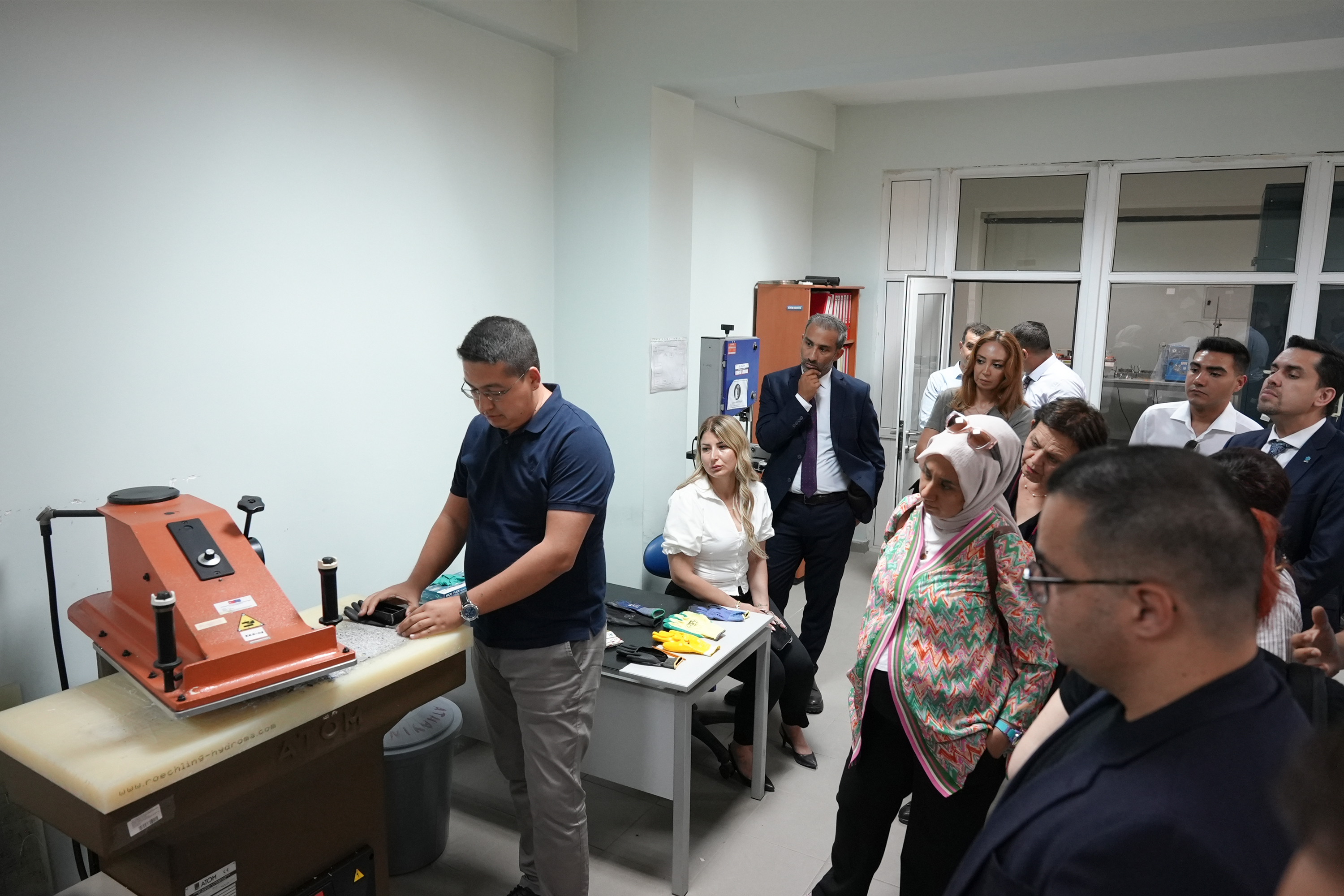
In our PPE Testing Laboratories, it was demonstrated practically according to which standards personal protective equipment is tested and how conformity assessments are performed. In this context, various tests were carried out on a work glove and work safety footwear.
Next, the PPE Testing Tower was visited. Here, durability and conformity tests of a safety helmet and a parachute-type safety harness were demonstrated practically.
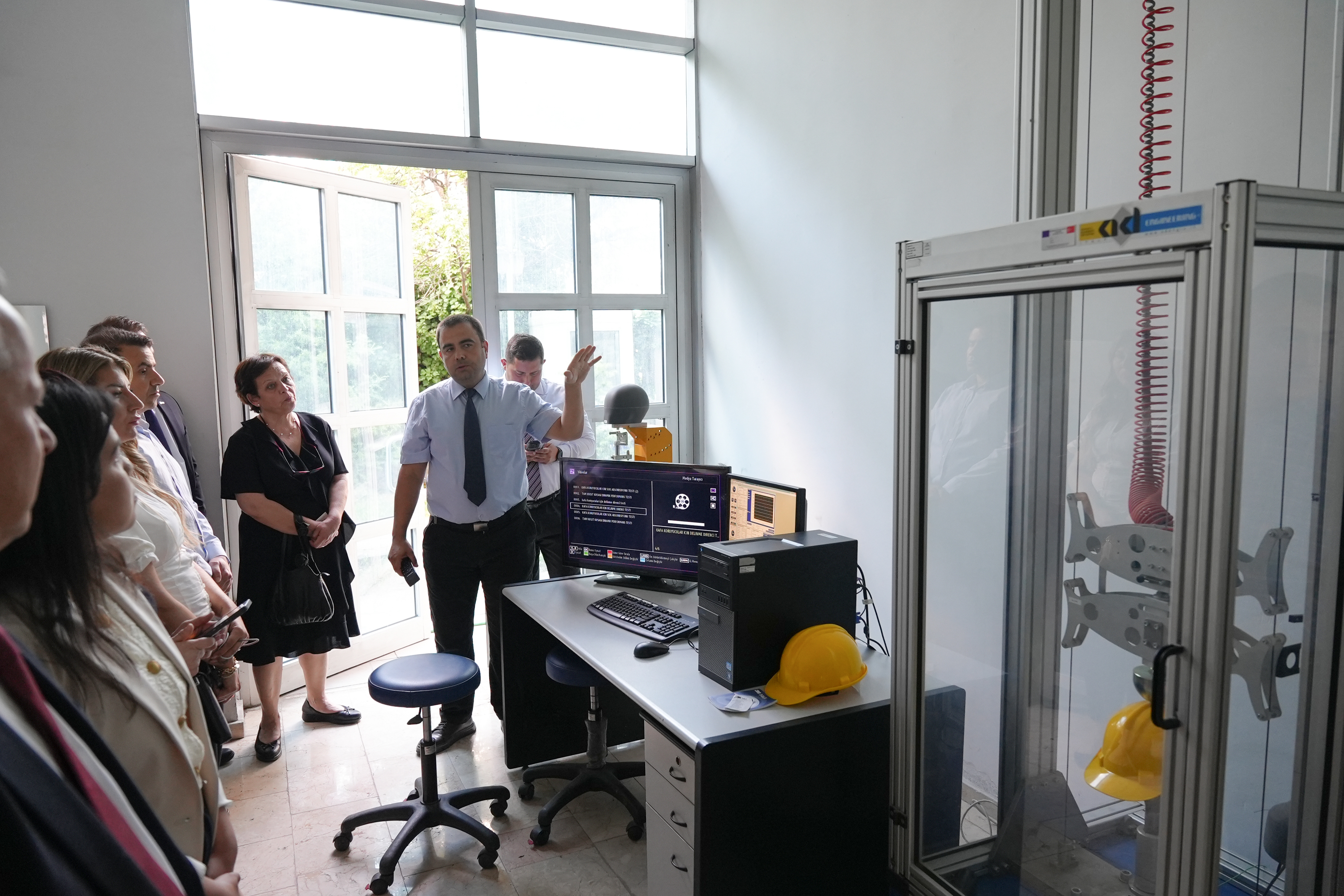
In the introduction of our Mobile Occupational Health Vehicles, information was provided regarding the operational areas of the vehicles, the services they offer, and the diagnostic equipment they house.
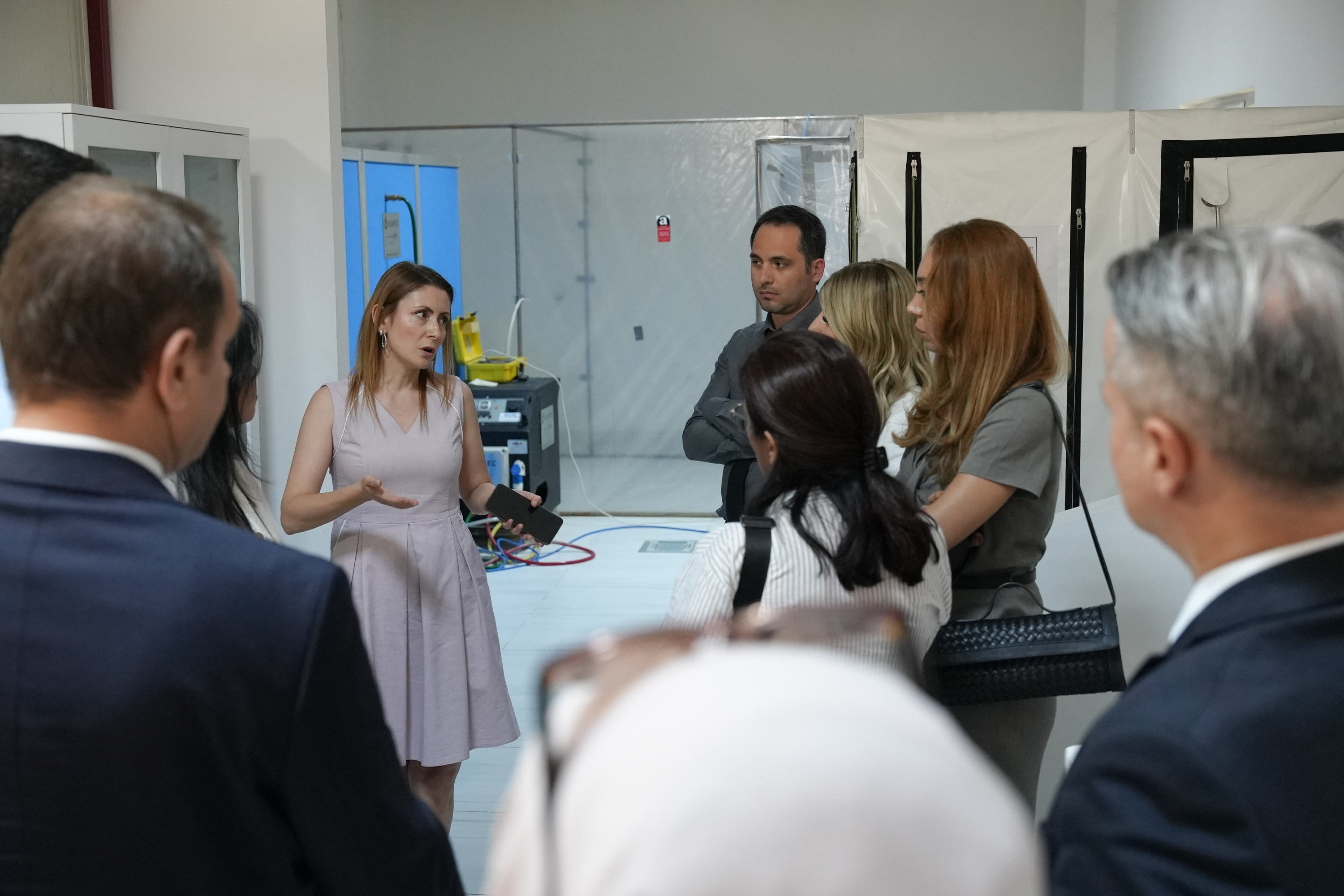
In the final part of the field visits, our asbestos training facilities were toured. While introducing the practical application areas used in asbestos abatement training to the participants, information was also conveyed regarding the “Asbestos House,” which shows the locations where asbestos may be found in daily life and building structures.
The Program Concluded with Mutual Evaluations
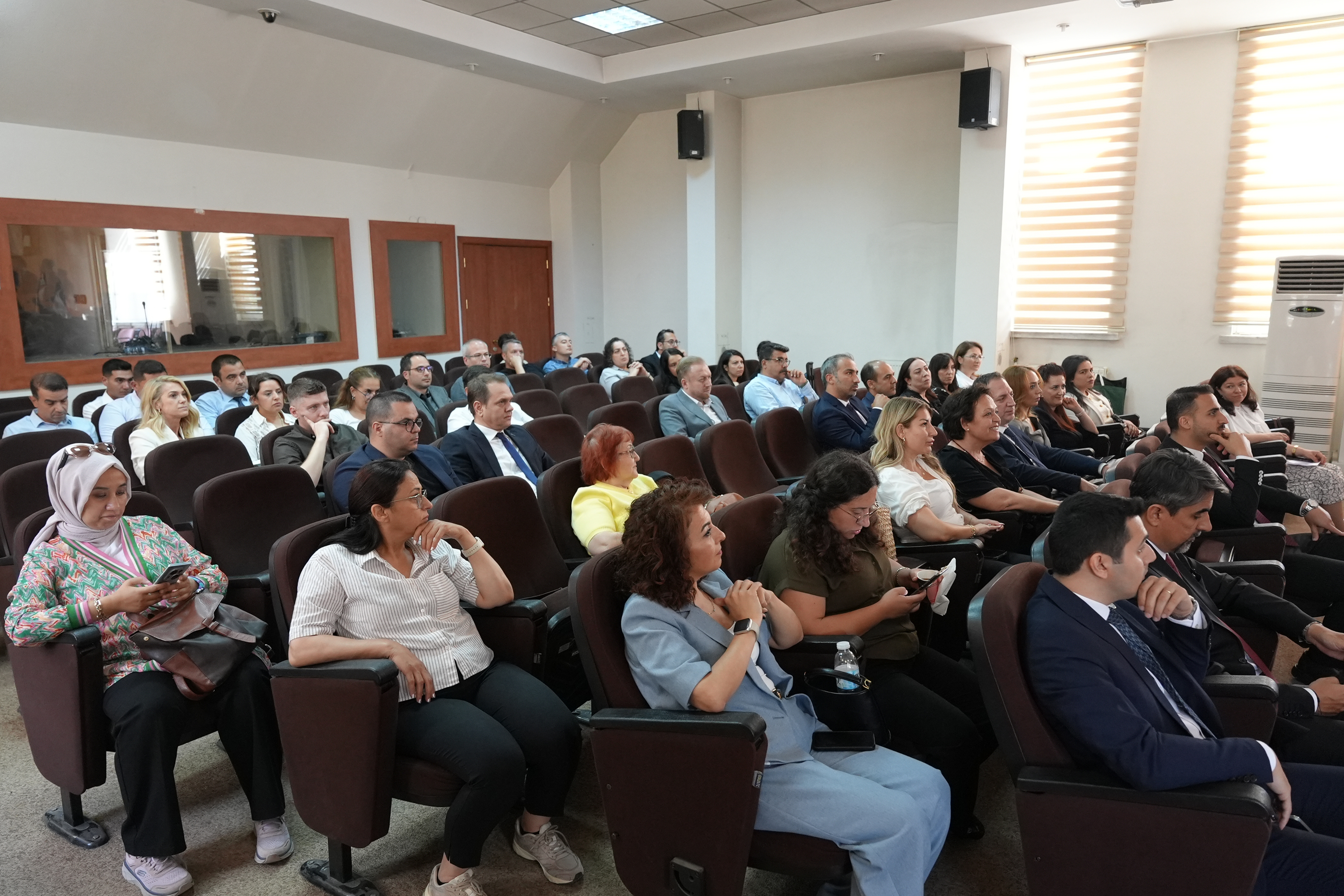
Following the completion of the on-site inspections, participants gathered once again in the conference hall. In the final segment of the program, mutual evaluations were carried out, and opinions, expectations, and recommendations were shared. The visit program, where current developments and practices in occupational health and safety were discussed, concluded with expressions of mutual satisfaction.
As the General Directorate, we continue to support information sharing, cooperation, and the transfer of experience with all institutions and organizations operating in the field of occupational health and safety; in this context, we keep our doors open to similar visits and meetings to be held.
Source: https://www.csgb.gov.tr/isggm/tr/haberler/10062026/
(Access Date: 10/06/2026)